Pip's grave illness and recovery
Great ExpectationsPip’s grave illness and recovery mark a turning point from feverish estrangement to renewed dependence on Joe. The illness unsettles Pip’s sense of reality, but recovery brings into focus what his pursuit of gentility had obscured: Joe’s steadfast care, Pip’s own responsibility for their distance, and the difficulty of repairing trust once it has been damaged.
Before the Illness: Estrangement and Recognition
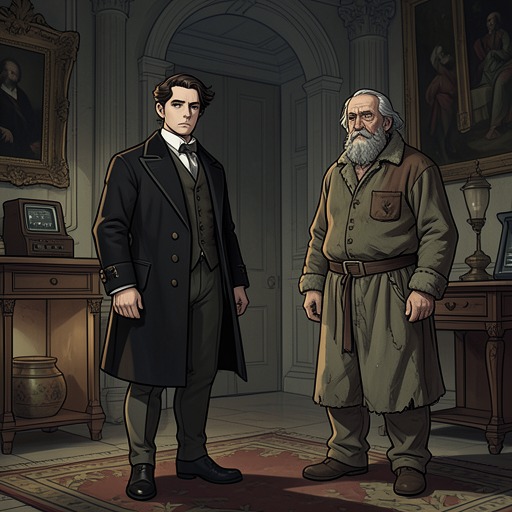
Pip’s illness comes against a history of shame and self-reproach. As a boy, his first visit to Satis House altered how he saw home: Joe’s forge, once imagined as a path to independence, came to seem coarse beside the life he associated with Miss Havisham and Estella. The adult narrator acknowledges that he cannot neatly divide responsibility for this change between his own disposition and the people around him; the essential fact is that the change took hold. Later, his hopes of marrying Estella and being raised to gentility further entwine her with the aspirations that first estranged him from Joe. The revelation that Magwitch is his benefactor overturns Pip’s imagined account of his prospects. He understands that Miss Havisham never intended Estella for him and that he had served as a convenient instrument in her household. More painful still, he recognizes that, in pursuing those expectations, he deserted Joe. He cannot bring himself to return to Joe or Biddy, because his sense of having behaved badly overwhelms the comfort their loyalty might have offered. The fever and recovery follow this moral crisis; they do not erase it.
The Fever and Its Disorientation
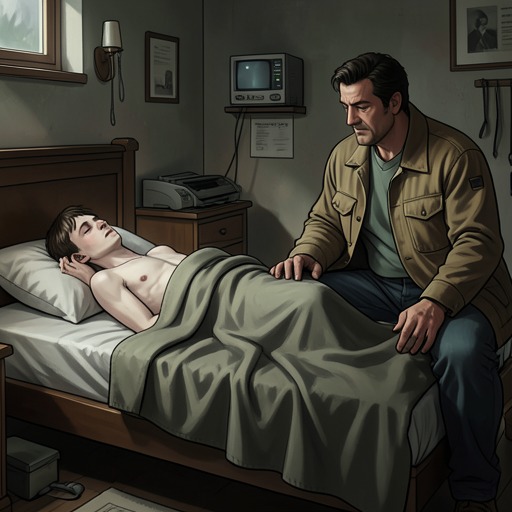
Pip describes the illness as a period of fever, isolation, severe suffering, and recurring loss of reason. At times he confuses his identity with inanimate parts of a building or machine, imagining himself both trapped in a wall and caught up in an engine. His account presents these transformations as experiences within the illness, not as literal changes. He also sometimes mistakes people trying to help him for attackers, only to recognize their care and collapse from exhaustion. Through these shifts, one likeness remains constant: those who tend Pip eventually appear to him as Joe. Once the worst of the illness has passed, this image continues without changing. Pip sees Joe in the bedside chair and at the window, and recognizes Joe’s hand when offered a drink. The repeated appearance gives the fever’s confusion a clear emotional center: even when Pip cannot reliably make sense of the people around him, his imagination returns to the person whose protection he had taken for granted.
Joe’s Care and Pip’s Recovery
Pip’s recovery is gradual. He slowly gains strength, and Joe stays with him; in Joe’s presence, Pip feels like the child he once was. Joe talks with the familiar confidence and simplicity of their earlier life and cares for Pip with a tenderness proportioned to his dependence. He takes responsibility for practical arrangements as well as companionship, including finding someone to do the household work after discovering that the previous laundress had been taking household goods. A day out in an open carriage becomes a measure of how far Pip has come and how much care Joe has given him. When Pip is ready, Joe wraps him up, carries him downstairs, and settles him into the carriage before taking the seat beside him. They travel together into the countryside on a Sunday. Pip is moved by the landscape and the bells, but the memory of his illness checks his peace; he recognizes that he is not yet able to feel as thankful as he should. He rests his head on Joe’s shoulder, recalling the physical ease of their earlier closeness.
Renewed Intimacy and Its Limits
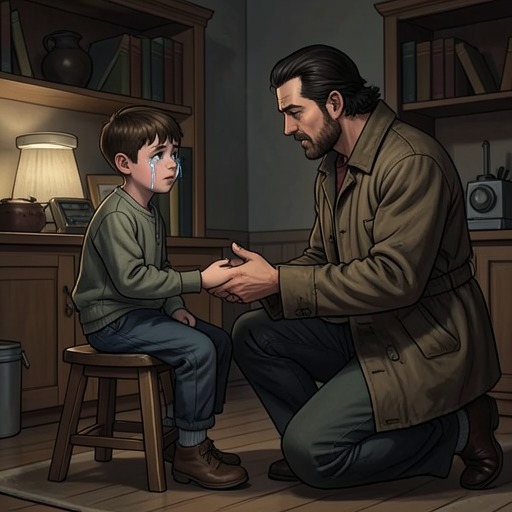
The return of affection does not instantly resolve the damage between them. Joe tactfully avoids pressing Pip about whether he understands how greatly his expectations have dissolved, and Pip remains unsure what Joe has understood. That restraint is itself significant: Joe and Biddy have prepared the ground for Pip to recognize the change without demanding a confession from him while he is still weak. As Pip grows stronger, however, he notices Joe becoming less at ease. During Pip’s dependence, Joe had resumed their old forms of address and intimacy; as Pip recovers, Joe gradually loosens his hold on that closeness. Pip comes to understand the cause as his own conduct. He has given Joe reason to fear that, once prosperous, Pip would grow cold and cast him off. Recovery therefore restores a relationship without returning it to an untouched past: Joe’s care is freely given, but trust has been made vulnerable by Pip’s earlier choices.
Narrative and Thematic Significance
The episode’s first-person retrospective narration sets the bodily and mental confusion of the fever beside the adult Pip’s more lucid recognition of responsibility. The recurring likeness of Joe supplies continuity within the illness, while the return of Joe’s care makes visible a form of loyalty that wealth and social aspiration could not replace. Yet the recovery is not presented as a simple cure for Pip’s moral failure. He becomes physically stronger and receives Joe’s tenderness, but he also sees that Joe has learned to guard himself against being abandoned again. The illness thus turns dependence into a kind of recognition. Pip, who had once measured his life against gentility and felt ashamed of Joe’s world, must accept the care of the person he neglected. The movement from fever to recovery restores their companionship in practice, while Pip’s awareness of the strain he caused gives that reunion its lasting emotional weight.